
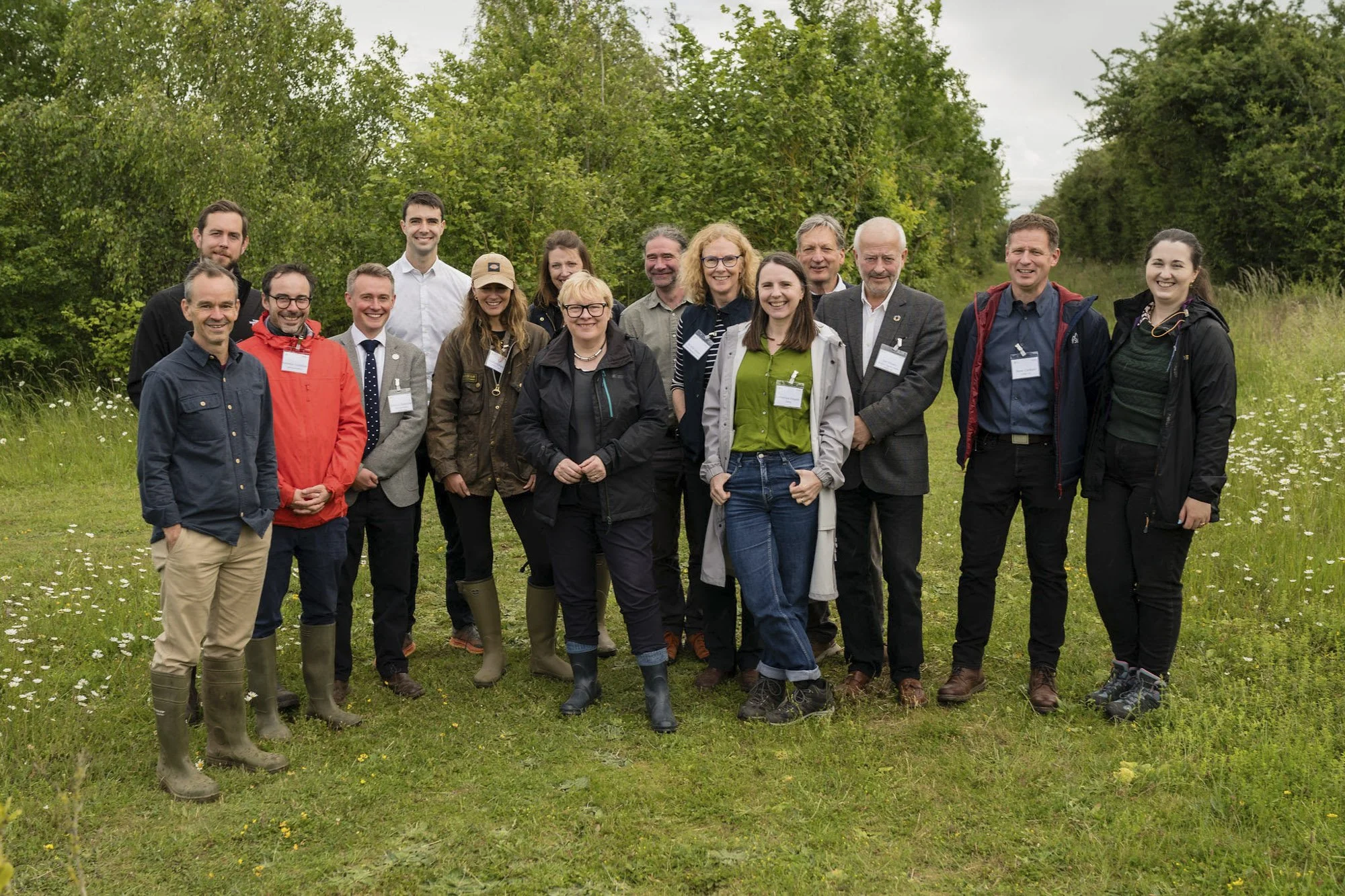
Dame Angela Eagle meeting with farmers, businesses and organizations from across the organic sector at Sacrewell Farm (image courtesy of Riverford).
The Government’s plans to grow organic farming and food have been welcomed by the English Organic Forum (EOF), following the launch of a new Organic Action Plan for England.
The action plan was announced on 14 October, on the eve of the Organic Trade Conference 2026, where Soil Association Certification revealed the latest market growth trends to over 200 leaders from across the organic sector.
The plan recognizes the potential for organic farming systems to deliver benefits for soil, water, wildlife and animal welfare, with a focus on growing domestic organic production and strengthening supply chains.
It includes an ambition to increase England’s organic farmland from around 3% today to 10% over the next decade. The plan recognizes that increasing domestic production would help reduce reliance on imported food while expanding farming systems that avoid synthetic nitrogen fertilisers and pesticides, according to the EOF.
With food production increasingly exposed to extreme weather, volatile input costs and disruption to global supply chains, EOF says the plan also has an important role to play in strengthening the resilience of English farming.
In response to rising consumer demand for organic produce, another focus of the plan will be supporting farmers and tackling supply chain barriers to help secure markets for British organic food and drink.
A win for UK farming
“An Organic Action Plan for England is a win for the UK's food and farming system,” says Adrian Steele, co-chair of the EOF and Soil Association farming advisor. “It recognizes that more organic land can help the government to deliver its wider environmental goals, from healthier soils and cleaner water to more biodiversity and less reliance on artificial inputs like pesticides.
“With growing consumer demand for organic often being met by imports, we have long called for a more joined-up approach that breaks down supply chain barriers and helps farmers meet that demand. England has an innovative and entrepreneurial food and farming sector, and we welcome this plan which we hope will create the right conditions for organic farmers, growers and businesses to invest and thrive.”
Adds Sos Stopes, co-chair of the EOF and policy advisor to Organic Farmers & Growers CIC: “It is encouraging to see the Organic Action Plan for England published. The English Organic Forum, representing the organic sector, has worked hard with Defra on the development of a credible plan. Defra’s leadership and the positive support of the Environment Secretary Dame Angela Eagle for growth in the organic sector is a well-deserved acknowledgement of the practical ways that organic farming helps deliver the government’s environmental ambitions.”
“The Organic Action Plan for England is a chance to give growers the confidence and practical support to convert to organic, invest and grow more. That means more British organic fruit and veg on our plates, stronger local supply chains and a more resilient future for UK horticulture.”
Rob Haward, CEO of organic veg box company, Riverford, comments: “British fruit and veg growers are facing growing pressure from unpredictable weather, rising costs and supply-chain disruption. Growing organically starts with looking after the soil, building fertility and working with nature. At Riverford, we've farmed this way for 40 years. We see every day why healthy soils and a diverse farming system matter, particularly when growers are dealing with increasingly difficult growing conditions. We should be growing more of the organic fruit and veg we eat here in the UK. Demand is growing, but too much of the opportunity is being met through imports.
“The Organic Action Plan for England is a chance to give growers the confidence and practical support to convert to organic, invest and grow more. That means more British organic fruit and veg on our plates, stronger local supply chains and a more resilient future for UK horticulture.”
EOF says that success won’t be measured simply by the publication of an action plan, but by whether more farmers are able to convert, more British organic food reaches the market and a greater share of the growing consumer demand is met from domestic production.
EOF members will continue to work with Defra on delivering the Organic Action Plan, including advocating for stronger, ringfenced financial support through the Sustainable Farming Incentive (SFI) to help farmers convert, existing organic businesses prosper and the sector contribute to environmental resilience, domestic food production and long-term food security.
By Jane Wolfe, contributor