
Feature: How healthy snacking has evolved
Jane Wolfe looks at how healthy snacking is changing as consumers seek products that deliver on taste, nutrition and functionality, while reflecting their values.
With 88% of UK consumers snacking at least once a day (Euromonitor) and sales of crisps, savoury snacks and nuts forecast to reach £7.8 billion by 2029 (Mintel), the snacking market remains one of the most dynamic areas of food and drink.
Today’s shoppers are looking for snacks that not only fit into busy lifestyles, but deliver genuine nutritional and functional benefits and, crucially, taste good too. They’re also paying closer attention to how products are made. Mintel says media coverage of ultra-processed food (UPF) influences 57% of UK snack eaters, with 77% favouring products with simple, easy-to-understand ingredients they perceive as more trustworthy.
Raye the store founder Nicole Compen believes shoppers are looking for indulgence that doesn’t feel like a compromise. “Consumers want the pleasure of a treat without feeling like they’ve abandoned their wider health goals,” she says. “We’re seeing more brands rethink familiar formats – from Delve’s high-fibre oat crisps to FATT’s ultra-low sugar snacks – showing that better-for-you doesn’t have to mean boring. BitesWeLove is a good example of putting flavour and craveability at the centre, while Creatime is taking a traditionally functional ingredient like creatine and turning it into something genuinely enjoyable. The common thread is that these brands are starting with the consumer experience, rather than simply adding a health claim to an existing product.”
The Protein Ball Co reflects this shift with its latest launch, Stuffed, featuring a gooey nut butter centre in Pistachio & Chocolate, Matcha & Vanilla or Hazelnut & Chocolate. “As consumers become increasingly focused on wholefoods and less processed products, we saw a gap for snacks that delivered the satisfaction of a dessert or confectionery treat while still being made from wholesome ingredients,” explains marketing director Samantha Williams.
Williams says the brand spent a lot of time researching and sourcing the best ingredients, for example partnering with fellow Sussex brand OMGTEA for its matcha, to provide exceptional quality and flavour. “We believe shoppers no longer expect healthier snacks to be ‘good for a healthy product’ – they expect them to be genuinely delicious,” she adds.
“Consumers want the pleasure of a treat without feeling like they’ve abandoned their wider health goals. We’re seeing more brands rethink familiar formats ... showing that better-for-you doesn’t have to mean boring.”
Beyond nutritional claims, Compen says shoppers want stronger brand stories. “Health credentials might get a shopper to pick something up, but they’re increasingly looking for a fuller story – what’s in it, where the ingredients come from, why the brand exists and what makes the product genuinely different. Flavour innovation and provenance are particularly powerful because they give consumers something to discover, while sustainability and transparency can build trust when they’re backed up by meaningful actions rather than just claims.”
As well as seeking out brand stories, consumers are snacking across more moments of the day, and Compen sees growing opportunities for products designed around specific occasions. “It’s less about a generic ‘healthy snack’ and more about what you need at 8am, 3pm or after a workout – whether that’s sustained energy, focus, satiety or simply something enjoyable,” she explains.
Protein powers growth
The UK protein bar market is now worth £163.2 million, with sales growing by 6% year on year, according to Circana. Frank is one brand taking a different approach to the sector as the UK’s first savoury, non-ultra-processed high-protein bar designed to challenge the traditional sweet protein variant.
“The idea came from a simple frustration: almost every protein bar on the market is really a dessert wearing a nutrition label,” says founder Sam Bilinge, who believes clean eating has gone from ‘a nice-to-have’ to a dealbreaker. “Strip away the marketing and you’re looking at sugar alcohols, artificial sweeteners and a long list of ingredients that have nothing to do with food. I wanted something I’d actually want to eat, made from ingredients you’d recognize in your kitchen. Frank isn’t really competing with other protein bars – it’s arguing that the category shouldn’t exist in its current form at all.
“People have got much better at reading ingredient panels, and once you start reading them, you can’t unsee what’s in most ‘healthy’ snacks. Clean label isn’t a trend to us, it’s the whole reason Frank exists. Build the flavour from real, recognizable ingredients first, and let the protein content be a consequence of that, not the headline you have to disguise.”
Although protein and fibre remain key areas of interest, as consumers seek greater satiety, better gut health and more nutritional value from their snacks, Compen says brands can no longer rely on a ‘high protein’ claim alone. “Consumers are becoming more discerning about the overall product – how it tastes, what the ingredient list looks like, how processed it is and whether the nutritional benefit is genuinely useful,” she says. “The opportunity is to make these benefits feel natural and enjoyable rather than like a nutritional checklist.”
Fab Four
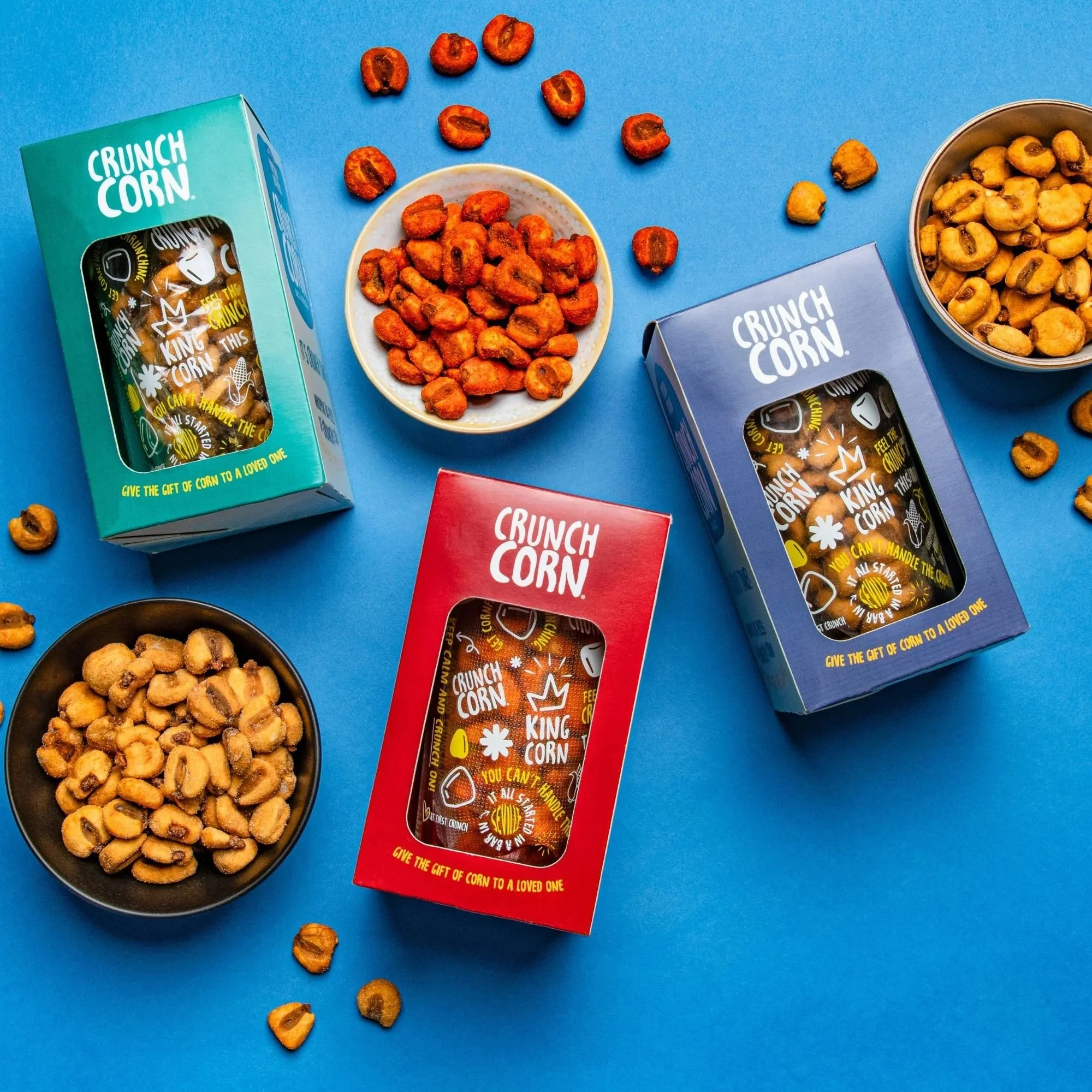
Savoury corn – Popcorn Kitchen’s Crunch Corn savoury roasted corn snack takes the brand beyond its popcorn roots. Made with Peruvian Choclo giant corn, the fibre-rich, HFSS-friendly snacks come in 100g sharing bags in Sea Salt, Salt & Vinegar and Spicy Chilli.
Brain food – INDI’s plant-based Brain Bar aims to support cognitive function and energy. Made with 16 nutrient-rich ingredients, including lion’s mane mushroom, rhodiola, guarana, iron, zinc and vitamins B12, C and D3, it delivers over 6g of gut-friendly fibre.
Popping with flavour – Kallø’s 100% natural Popped Corn Cakes tap into the fibremaxxing trend with 7.8g of fibre in three cakes. There are six flavours: Cinnamon, Caramel, Buttery Toffee, Dark Chocolate with Sea Salt, Dark Chocolate with Salted Caramel and Sweet & Salty.
Premium snacking – with consumers embracing the ‘posh crisp’ trend, Trafo’s line of organic crisps hit the mark. Choose from varieties including Rosemary & Sea Salt, Truffle and Hungarian Smoked Paprika, as well as crisps fried in 100% Extra Virgin Olive Oil or Coconut Oil.
Innovation with purpose
Bringing together several of these trends – health, sustainability and provenance – start-up Riff offers ‘a complete, eco-friendly nutrition solution’ and strong origin story. Four uni students began the business prompted by the surplus of bruised bananas in their community fridge. They set out to tackle food waste and fill the national ‘fibre gap’ with a line of wonky snack bars.
“I think our secret weapon is our high real-fruit content,” explains co-founder Lucie Campbell. “In our fruity bars, we use naturally wonky freeze-dried ingredients, with one bar containing either a whole apple, a whole banana or 100g of berries. That gives us rich, vibrant, authentic fruit flavour naturally, completely eliminating the need for artificial sweeteners, flavourings or heavy additives.”
Campbell highlights growing awareness among young consumers of the need to reduce food waste, but stresses that products must taste fantastic if consumers are to build sustainable, healthy habits.
“That said, sustainability also has to be accessible and convenient,” she notes. “In challenging financial times, consumers naturally gravitate towards what is affordable and easy. If we can create high-quality, sustainable snacks that make fighting food waste convenient and cost-effective, that becomes the deciding factor between a consumer choosing Riff over a standard, non-sustainable option.”
Looking to the future, Compen sees the category moving beyond conventional ideas of healthy snacking. “I think we’ll see more crossover between snacks, functional nutrition and everyday food, with less emphasis on the traditional idea of a ‘healthy snack’. The opportunity is for brands to make better choices feel exciting and culturally relevant – whether that’s through new formats, global flavours or clever ways of incorporating nutrition into foods people already love.”
By Jane Wolfe, contributor