
Feature: Elegantly Wasted
Image credit: Benjamin Swanson
From frozen innovation to whole-fruit chocolate, brands are reimagining food waste by positioning it as part of the solution, not the problem. Jane Wolfe talks to the people proving that sustainability and good business can go hand in hand.
Food waste is a global challenge – and the natural products sector is increasingly stepping up with smart, scalable solutions. From rescuing imperfect produce to finding new uses for overlooked ingredients, innovation is proving that less waste can go hand in hand with better business.
According to WRAP’s latest estimate, 4.4 million tonnes of edible food is wasted in the UK each year – enough to fill eight Wembley Stadiums, 88 Royal Albert Halls or 3,500 Olympic-sized swimming pools. At the same time, 11 million people in the UK are experiencing food insecurity, including almost three million children who don’t have reliable access to healthy, nutritious food, according to The Food Foundation.
One organization tackling both issues is FareShare, which redistributes good-to-eat surplus food from across the industry to nearly 8,500 charities and community organizations. In 2024-25 alone, it redistributed 62,000 tonnes of food – equivalent to over 148 million meals – helping ensure edible food reaches the people who need it the most while reducing waste and its impact on the UK’s greenhouse gas emissions.
Upgrading ‘ugly’ produce
Beyond redistribution, brands are also doing their bit – transforming surplus and imperfect produce into products delivering both sustainability and flavour. Complete Organics was inspired to use ‘ugly vegetables’ in its fermented product range by the disconnect between how they look and actually taste. “In retail, strict size and cosmetic standards lead to large volumes of perfectly good produce being sorted out,” explains the brand’s managing director Janis Englert. “At the same time, we were building a brand around fermentation, flavour and sustainability. Using oversized or visually imperfect vegetables was a natural fit. They are often even more mature and flavourful, and fermentation allows us to transform them into something with real character and added value.”
“For us, the key impact is not only preventing waste, but upgrading raw materials into premium, value-added organic products with a long shelf-life. Fermentation has always been a smart way to extend the life of fresh produce without relying on heavy processing.”
Working directly with around ten organic farms in Bavaria through long-term partnerships, Englert says that well over 50% of the vegetables the brand processes fall outside standard retail calibration. “The sourcing process is collaborative,” he explains. “Farmers inform us early on about expected volumes, including produce that may not meet retail specifications. Because we are less dependent on cosmetic standards, we can integrate these batches into our production planning. This gives farmers more security and flexibility, while ensuring we receive high-quality organic raw materials.
“For us, the key impact is not only preventing waste, but upgrading raw materials into premium, value-added organic products with a long shelf-life. Fermentation has always been a smart way to extend the life of fresh produce without relying on heavy processing. That philosophy strongly influenced our decision.”
Englert stresses that reducing food waste is not a marketing angle, but part of a broader systemic approach. “By building close relationships with regional organic farmers and integrating non-standard produce into high-quality fermented products, we create value along the entire chain,” he says.
A whole fruit approach
Vivani’s new Whole Cocoa Fruit Chocolate goes beyond the conventional use of cocoa beans to embrace the entire cocoa fruit. Instead of adding refined sugar, the brand sweetens the chocolate with flakes made from the dried cocoa fruit pulp supplied by its Ghana-based partner KOA, which specializes in upcycling cocoa fruit components that would otherwise remain unused.
“The result is an organic chocolate with a naturally fruity sweetness and a more holistic approach to cocoa processing,” says Alexander Kuhlmann, head of marketing and PR at Vivani owner EcoFinia. “For us, it’s not just a new recipe, it’s a statement about how chocolate can evolve. When we looked closely at the cocoa value chain, we realized that traditionally only the bean is used for chocolate production, while the sweet pulp surrounding it is largely discarded. That felt like a missed opportunity, both in terms of taste and sustainability.
“We were inspired by the idea of respecting the entire fruit and unlocking its potential. At the same time, we saw the possibility of contributing to a more efficient use of resources and creating additional value for cocoa farmers. Combining culinary curiosity with responsible sourcing was the natural next step for us.”
The brand says that by using cocoa pulp instead of sugar, the flavour becomes more vibrant and multilayered, with subtle tropical notes reminiscent of lychee or light citrus. It creates a rounded sweetness and lends a gentle acidity that enhances the cocoa’s aromatic complexity without overpowering it. “The overall experience feels lighter, more dynamic and surprisingly fresh,” says Kuhlmann.
Cocoa fruit flakes behave differently from refined sugar, so the brand had to carefully adapt its formulations to achieve the right texture, sweetness balance and shelf stability.
Skin deep
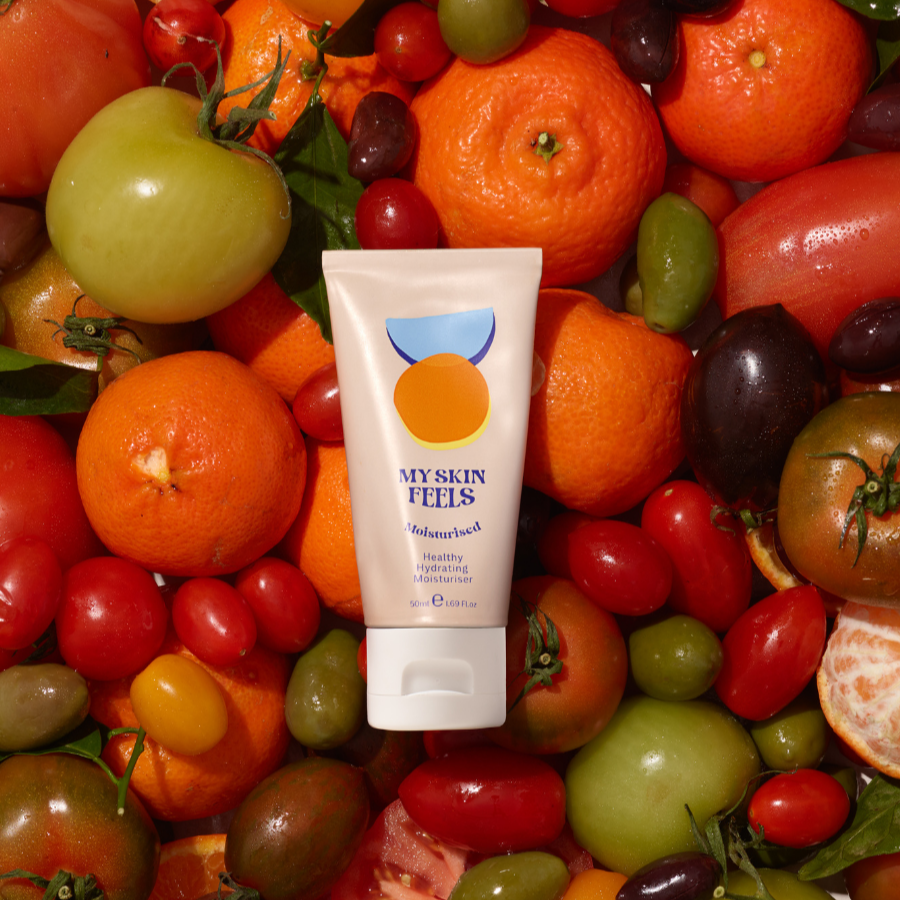
In the beauty realm, My Skin Feels launched in Brighton in 2023 to produce sustainable skincare using a unique blend of microbiome-friendly, fermented, rescued ingredients from the food industry that would usually go to waste.
These include olive pomace – a by-product from the Italian olive oil industry which hydrates and enhances the complexion, antioxidant-rich discarded Italian tomato skins and fermented stalks left over from making organic Italian breakfast oats. The products also harness skin-hydrating, nutrient-dense mandarin fruit juice waste meaning no ‘new’ water is used.
With 15 years’ experience in the beauty industry – including being part of the founding Charlotte Tilbury team – founder Danielle Close created the brand ‘not because we need more products, but because we need more products that have stronger core values’.
“Suitable for sensitive and eczema prone skin, we don’t believe in overly complicated routines, instead, we focus on multitasking products that do the job,” says Close. “Yes, we’re here to help protect the planet, but we’re also here to help consumers navigate the very overwhelming beauty market with products that actually work – no fads, no fuss,” she explains.
The initial capsule range of a foaming face wash and a moisturizer encapsulates the brand’s ethos of fewer products with bigger, better results, but Close disclosed that there is a new product launching this year made from the by-product of a flower, which she is ‘very excited about’.
Fighting waste with frozen
Frozen food is ‘entering a new era’, according to a report by Nomad Foods. It found that 47% of consumers say freezers help them reduce food waste, while 63% recognize that frozen food can be as nutritious as fresh.
It’s increasingly seen as a smart alternative because it helps households shop more economically. A core advantage is shelf-life, explains Lazaro Campuzano, sales manager at frozen food brand bio inside: “Organic frozen vegetables, fruits and ready-made meals remain usable for months without any loss of quality, unlike fresh organic fruits and vegetables, which can spoil quickly. This significantly reduces household waste.”
Flexible portioning means consumers can use just what they need, and frozen products also allow targeted stockpiling with no pressure to use everything immediately. This makes shopping, planning and budget control easier, while year-round availability reduces exposure to seasonal price spikes.
Nutritionally, the difference between frozen and fresh produce lies in the time between harvest and consumption. And this is precisely where freezing plays to its strength, says Campuzano: “Bio inside organic frozen vegetables are typically harvested at their optimal ripeness, briefly blanched and flash-frozen within a few hours. This process largely prevents vitamin loss, stabilizes flavour and preserves delicate nutrients such as vitamin C, folate and provitamin A. The result: the nutritional values remain virtually constant for months.”
By Jane Wolfe, contributor