
Rude Health cuts food waste by 95% as sales climb almost a quarter
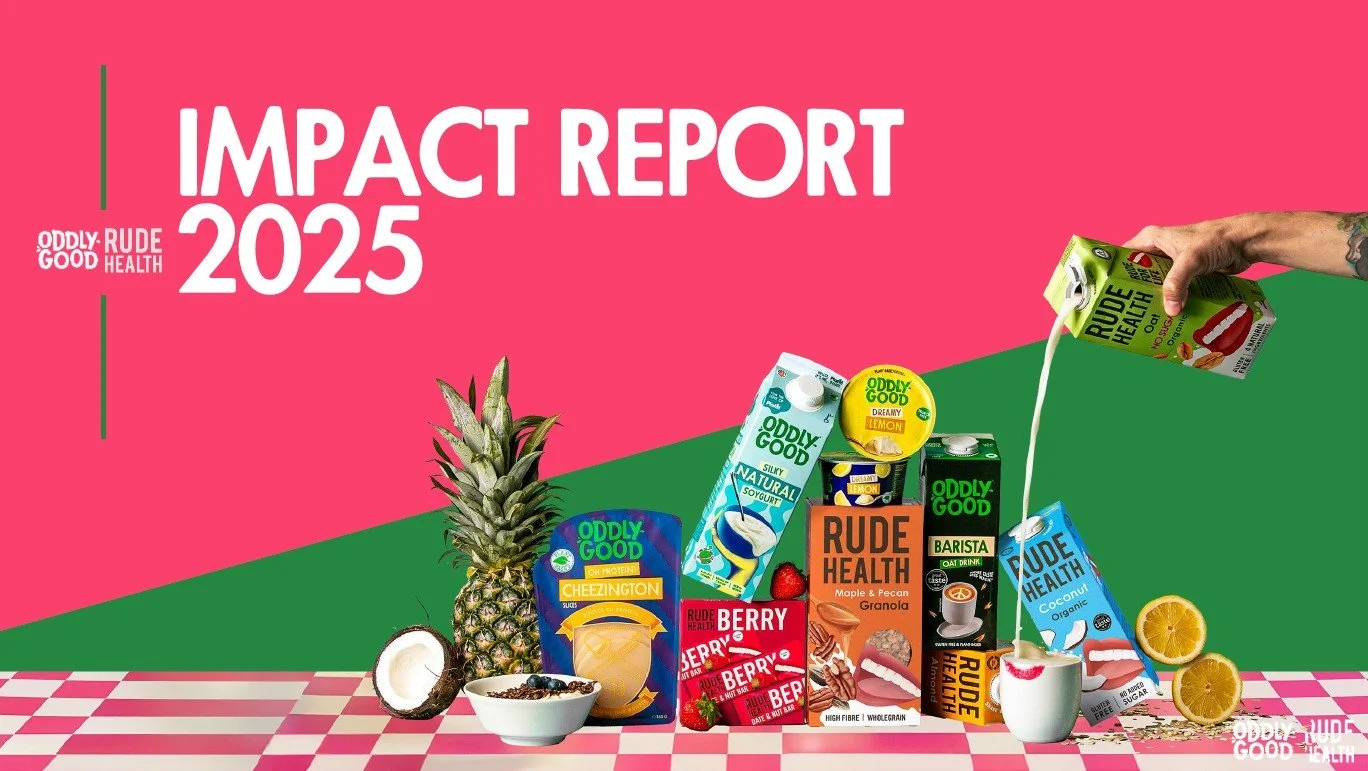
Rude Health’s latest impact report reveals growing sales and less waste for the business.
The plant-based drinks brand said it disposed of less than 200kg of stock across its entire 2025 production and maintained its zero waste to landfill policy. It also committed to WRAP’s food waste reduction roadmap and shifted almost all transport away from road freight. In fact, it used road for just 2% of orders in favour of rail – which it says reduced CO₂ emissions by 73%.
The report also highlights the company’s work to tackle food insecurity. During the year, Rude Health donated 4.5 tonnes of surplus stock, equivalent to around 10,700 meals, to FareShare, with the food distributed to 1,000 charities. Employees also contributed around 300 volunteer hours at The Felix Project, helping sort and distribute surplus food across London. Since the partnership began, Rude Health and FareShare have donated the equivalent of more than 307,000 meals.
On sourcing, the company reiterated its focus on organic ingredients, sourcing soya from Europe with no links to deforestation, organic oats from Northern Europe and organic coconuts from smallholder farmers in Sri Lanka and the Philippines.
“Our latest impact report really shows what’s possible when you bake sustainability into your day-to-day rather than treating it like a side project.”
The report also shows that Scope 3 emissions increased during the year. Rude Health attributed the rise to stronger sales of products such as coconut drink, which it said have a higher emissions factor than oat drinks. It is working with suppliers to improve ingredient sourcing from an emissions perspective.
Looking ahead, the business plans to deepen its integration with Finnish plant-based brand Oddlygood, following the companies joining forces in 2024. Priorities for 2026 include consolidating supply chains to reduce transport emissions, improving sourcing practices and sustainability reporting, and embedding people and planet objectives across the combined business.
Commenting on the report, Sam Maguire, Oddlygood Group’s UK country manager, says: “Our latest impact report really shows what’s possible when you bake sustainability into your day-to-day rather than treating it like a side project. Continuing to reduce disposed stock by 95% and keeping zero waste to landfill are huge wins for us, but we’re also proud of the more direct impact we can have on the community close to our London offices, like donating over 10,000 meals and rolling up our sleeves with The Felix Project.
“As companies grow, it's essential we do it in the right way – balancing profitable growth with positive impact. We want to keep pushing ourselves as we continue to grow to have more impact and show business growth can be a force for good.”
By Jane Wolfe, contributor