
Interview: Teresa Allward, Langford Farm
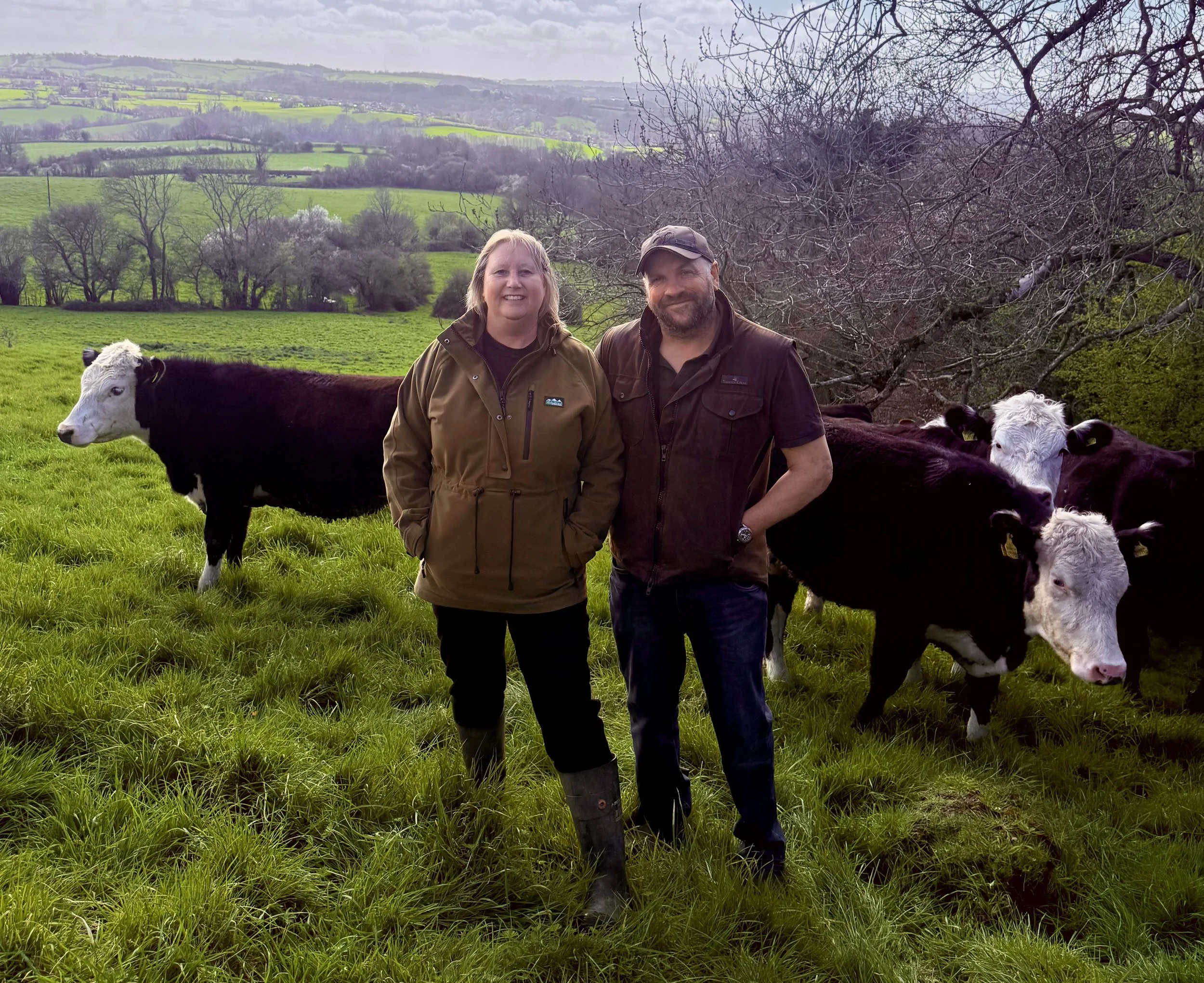
Teresa Allward from family-run Langford Farm shares why she believes a committed organic approach is better for people, animals and the planet.
Teresa Allward lives and breathes organic farming. Every day she and her husband Charlie work hard to produce the Soil Association-certified organic milk and home-bred grass-fed beef that’s put Langford Farm – their family-run farm near Bristol – on the map.
“Organic shapes everything we do,” she says. “We both believe food production needs to be sustainable. And that starts with the soil. Nothing on this planet exists without it, so we want our soil to be healthy and full of life, with no artificial or synthetic inputs. Our farm is all permanent organic pasture. That means we have a living root in the soil all the time and disturbance is kept to a minimum as the land is never ploughed up.”
Teresa sees the couple’s life on the farm as part of a holistic, natural system that benefits the environment, biodiversity, animals and people. Every part of the system – from the nature-friendly approach to soil, to cattle adding their own organic matter to the land – benefits the whole and allows Langford Farm to produce what Teresa describes as ‘healthy and nutrient-dense’ beef and milk. “Today, food has become so processed,” she notes. “Instead, we want to offer food we believe is part of a solution to so many things. We just couldn’t do it any other way.”
Rooted in family
An organic approach isn’t new on Langford Farm. The land has been certified organic for over 25 years and owned by generations of the same family since the early 1900s. In fact, the present-day cattle’s breeding lines can be traced right back to the origins of Charlie’s grandfather’s herd. “I came into farming when I met Charlie,” says Teresa, who worked for a major retailer before becoming a farmer. “It was a real change for me – because farming really is a complete way of life. But it’s something I wanted to be part of, as producing food sustainably and looking after nature and caring for the animals is important. We feel fortunate that Charlie’s parents wanted to take an organic farming approach.”
Teresa says that organic farming ‘leaves space for nature’. To achieve this means working to maintain woodland, hedgerows and margins that provide natural habitat for biodiversity. “Our animals have a healthy, outdoor lifestyle,” she explains. “They can graze, forage and eat a natural diet, with plenty of space to express their natural behaviours.”
“It’s important to respect [nature] through how we farm. So that might be about how we look after soil health, the air and water quality and the landscape, or the way we can provide local people with good quality, delicious food that literally doesn’t cost the earth.”
Humans are a vital part of the equation too. The couple are well aware of how the way the farm operates can affect their local community. “We feel a responsibility to our community with how we go about our farming,” says Teresa. “It’s important to respect that through how we farm. So that might be about how we look after soil health, the air and water quality and the landscape, or the way we can provide local people with good quality, delicious food that literally doesn’t cost the earth.”
The farm’s milk may supply major organic brand Yeo Valley Organic, but as a smaller farm, selling direct is an important income stream. For example, the farm sells their beef from the farm and also has an online presence. Teresa maintains that buying from the farm supports other local suppliers and businesses, and that keeps money in the local economy. As the saying goes: ‘there’s a lot of industries that hang off a cow’s tail’.
Foundations for the future
Of course, the picturesque backdrop the farm provides faces challenges from some harsh economic factors. The government recently announced that food supply issues are a potential security threat in England. Yet the current food system is fragile and can often reward supermarkets that source cheap, imported produce over home-grown.
“Without financial sustainability, it makes it pretty challenging to continue delivering the benefits of all the work we do,” Teresa points out. “We hope to see government policies that reflect the true cost of food and that are designed to reward the more sustainable food production systems and effectively recognize their far-reaching environmental, health and social, animal health and welfare benefits rather than the damaging impacts of more extractive farming and food production systems.
“We’d also like to see policy and support that facilitates more conversion to organic farmland, but also effectively rewards maintenance of existing organic farms – not just to continue, but to thrive. We need to future-proof our livelihoods to be able to continue being part of the solution. But, without this certainty, it’s very difficult. We need stability because a lot of the decisions we make in farming are long term and so if policy changes all the time, or introduction is ineffective, it creates instability.”
Teresa is under no illusion that, as the climate emergency and global instability intensifies, the need for change is becoming more urgent by the day. “When I try to sum up organic, it’s all about interconnectedness,” she says. “When people choose organic food, there’s a host of far-reaching benefits stemming from that one decision. Whatever reason resonates most with you – whether it’s protecting nature, animals, sustainability, community or choosing healthy food that’s good for you – certification and informed choices mean you can trust that you’re making a real difference.”
Events on the farm
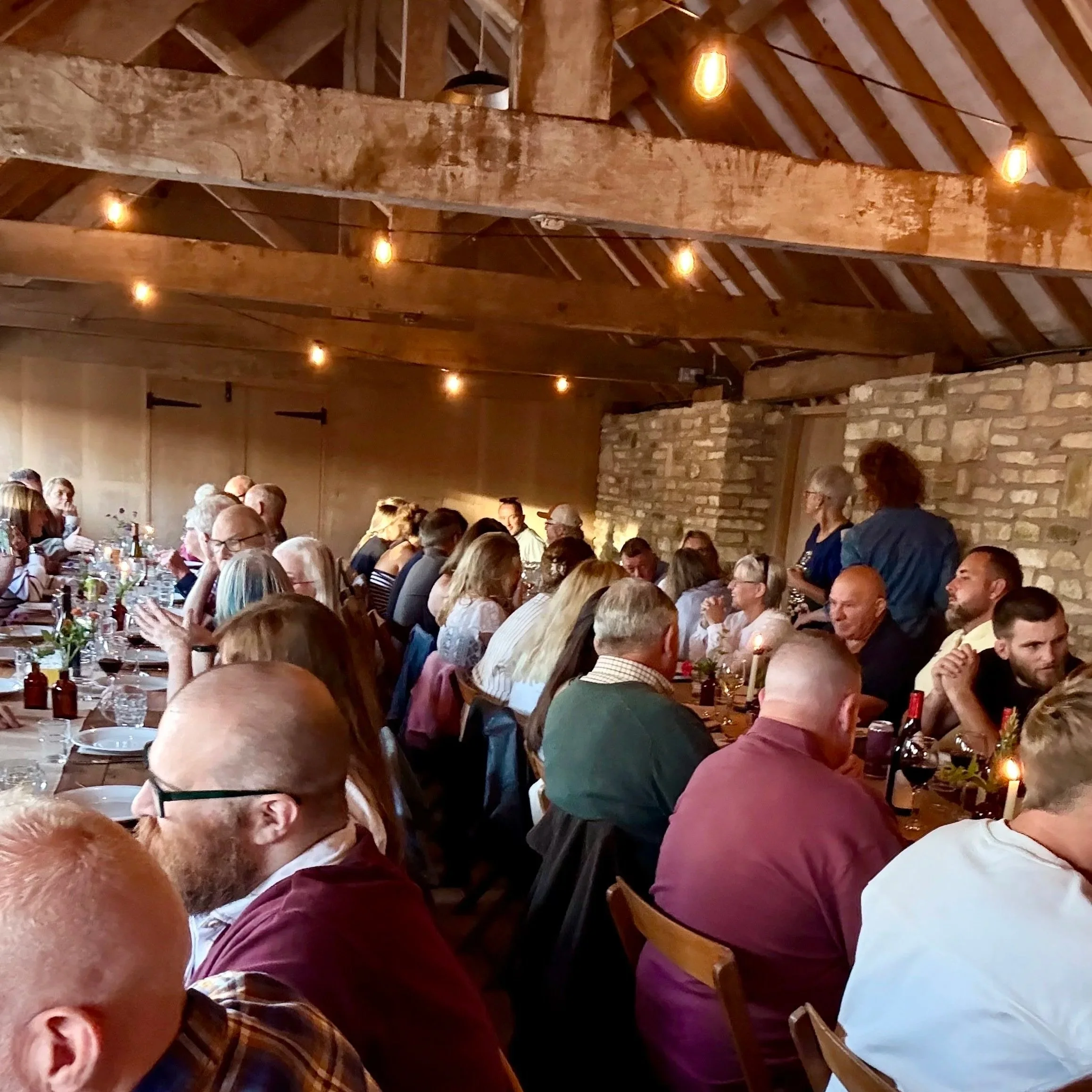
One way Teresa and Charlie connect with their community is through the lively events they hold at the farm – ranging from farm feasts to braais (South African barbecues). Through these socials, people can appreciate how their food is produced and the link between land management, animal health and welfare.
“People can come and collect their beef orders direct from the farm or come along to one of our events, such as our seasonal farmyard feasts, and enjoy eating our produce right in the heart of the farmyard,” says Teresa. “We’ve got a beautiful, rustic barn – an old traditional stone building that used to be the milking parlour many years ago. The events are centred around this space. People can engage with all the history of the farm, and we encourage them to look around, see the nature and wildlife, meet the animals and ask us questions. We’d like them to feel relaxed, have a good time and enjoy the whole experience of being on our farm.”
By Matt Chittock, acting editor